

Buying concentrated tomato paste is not simply a matter of finding the lowest price per metric ton. For restaurants, central kitchens, foodservice distributors and wholesale buyers, the wrong specification can affect recipe consistency, storage efficiency and the real cost of every finished batch.
This aseptic tomato paste buying guide explains how to evaluate 36–38 Brix paste before placing an order, with particular attention to the commercial and logistical needs of buyers in GCC and CIS markets.
What Does 36–38 Brix Tomato Paste Mean?
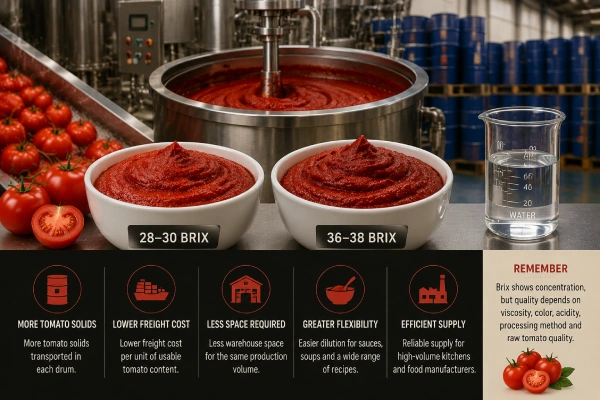
Brix indicates the concentration of soluble solids in the product. A 36–38 Brix tomato paste is highly concentrated and contains less water than common 28–30 Brix grades.
Its higher concentration can provide several practical advantages:
- More tomato solids transported in each drum
- Lower freight cost per unit of usable tomato content
- Less warehouse space required for an equivalent production volume
- Greater flexibility when diluting the paste for sauces, soups and prepared meals
- Efficient supply for high-volume kitchens and food manufacturers
However, Brix alone does not determine quality. Two products with the same Brix may perform differently because of their viscosity, color, acidity, processing method and raw tomato quality.
Is 36–38 Brix Paste Right for Your Business?
This grade is generally suited to operations that can handle concentrated ingredients and consume them at a predictable rate. Typical users include sauce producers, catering companies, central kitchens, food manufacturers, wholesalers and distributors supplying professional food businesses.
Large restaurant groups may also use aseptic paste through a central production facility. For an independent restaurant or café with limited consumption, however, a 220–240 kg drum may create unnecessary handling and storage problems after opening. In that situation, canned tomato paste or another foodservice pack may be more practical.
Before choosing the format, estimate:
- Monthly tomato paste consumption
- Available dry and refrigerated storage
- Capacity to transfer paste hygienically
- Expected usage time after opening
- Required concentration in the final recipe
The best pack is not always the largest one. It is the format that can be used efficiently without avoidable waste.
Aseptic Tomato Paste Buying Guide: How to Read the COA
A quotation should be reviewed together with a current Technical Data Sheet and a lot-specific Certificate of Analysis. A professional comparison should cover more than the headline Brix value.
|
Parameter |
What It Tells the Buyer |
What to Confirm |
|
Brix |
Concentration of soluble solids |
Contract range and permitted tolerance |
|
Break type |
How the tomatoes were heated during processing |
Hot Break, Cold Break or buyer-specific grade |
|
Bostwick |
Flow and consistency of the paste |
Test temperature, dilution and measurement time |
|
Color A/B |
Redness and visual quality |
Test method and minimum accepted value |
|
pH and acidity |
Acidity profile and formulation impact |
Declared range for the supplied lot |
|
Lycopene |
Natural red pigment content |
Minimum value, if important to the application |
|
Salt |
Whether salt affects formulation |
Added salt or no-added-salt specification |
|
Microbiology |
Hygiene and product stability |
Yeast, mould, total count and relevant pathogens |
|
Defects |
Visible impurities or processing faults |
Limits for black specks, peel and foreign matter |
Bostwick and color figures are meaningful only when the testing method is stated. A number measured at one dilution or temperature should not be compared directly with a number produced under different test conditions.
Cold Break or Hot Break?
The break method affects how the paste behaves in the finished recipe.
Cold Break paste is usually more fluid and is often selected where fresh tomato character, brighter color and easier blending are priorities. It may suit soups, juice-based products, lighter sauces and dishes where very high viscosity is not required.
Hot Break processing preserves more natural pectin, generally creating a thicker product. It is commonly considered for ketchup, pizza sauce and formulations that require body and suspension.
Do not select the break type by name alone. Ask the supplier for a sample and test it in your actual recipe. Water quality, spices, starches, oil and cooking time can all change the final result.
Calculate Usable Yield Before Comparing Prices
Price per drum does not show the full commercial value of concentrated paste. Buyers should compare the cost of usable tomato solids or the expected yield at their target Brix.
For example, a 230 kg drum averaging 37 Brix contains enough soluble solids to produce approximately:
230 × 37 ÷ 28 = 304 kg
of product at 28 Brix, before allowing for processing losses or formulation adjustments.
This calculation helps procurement teams compare different concentrations more fairly. It also provides a better starting point for estimating recipe cost, warehouse requirements and landed cost per kilogram of finished product.
A cheaper 28–30 Brix offer may not remain cheaper after freight, storage and usable yield are considered.
Check the Aseptic Bag, Drum and Loading Plan
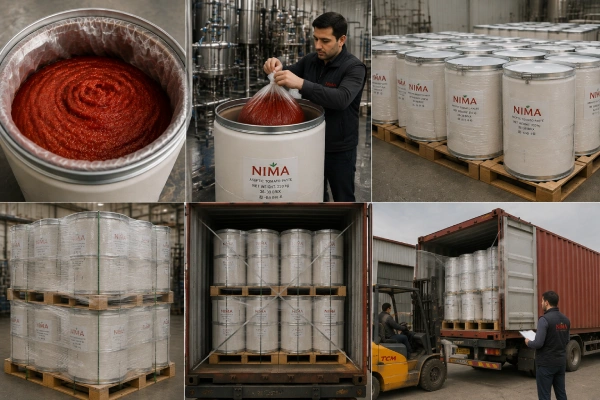
Aseptic tomato paste is normally filled into a sterilized multilayer bag and protected by a steel drum. The system helps preserve the unopened product during storage and international transport, but the packaging must arrive intact.
Before shipment, confirm:
- Net weight per drum
- Type and number of inner bags
- Drum condition and closure system
- Production date and remaining shelf life
- Palletized or non-palletized loading
- Number of drums and total net weight per container
- Container bracing and movement protection
- Procedure for damaged, leaking or swollen drums
Container capacity should never be assumed from another supplier’s quotation. Drum weight, pallet choice, shipping-line limits and local road restrictions can change the final loading quantity.
Once a bag is opened, its original aseptic protection no longer applies. The buyer should have a documented handling, refrigeration and usage procedure suitable for the facility.
What GCC and CIS Buyers Should Confirm
For GCC destinations, long routes and high ambient temperatures make storage planning especially important. Buyers should confirm warehouse conditions, transit protection and the supplier’s recommendations for preserving color and flavor. Labels, documentation and any Arabic-language requirements should also be checked with the local importer before shipment.
For CIS markets, buyers may need Russian or destination-language documentation, route-specific transport planning and protection against extreme seasonal temperatures. Import requirements can differ between CIS countries, so documentation should be verified for the actual destination rather than treated as one regional standard.
Depending on the market and contract, the document set may include:
- Commercial invoice and packing list
- Certificate of origin
- Health or sanitary certificate
- Certificate of Analysis
- Product specification or Technical Data Sheet
- Halal certificate when required
- Transport document
- Insurance or inspection documents agreed in the contract
Approve the Sample, Then Protect the Specification
A sample is useful only when it represents the product the supplier can reproduce commercially. Test it in the intended recipe, record the batch number and agree on measurable acceptance limits.
Ask whether the shipment will be tested against the approved specification and whether a pre-shipment or retained lot sample will be available. When repeat purchasing matters, consistency between batches is often more valuable than a small difference in the initial price.
A practical RFQ should state the required Brix, break type, application, quantity, drum weight, destination, preferred Incoterm, documentation and delivery schedule. It should also ask for the TDS, recent COA, packaging details, shelf life and sample terms.
Choose a Supply Format That Works After Delivery
A useful aseptic tomato paste buying guide should help the buyer look beyond the factory gate. Technical compliance matters, but so do handling, recipe performance, shipment condition and responsive communication when a question arises.
NIMARA works with professional buyers seeking tomato paste for bulk supply and export coordination for CIS and GCC markets.
To discuss your required Brix, application, quantity, packaging and destination, contact NIMARA and request a specification-based quotation.