For a restaurant, grocery chain or distributor, choosing a sauce is not simply a tasting exercise. The product must appeal to customers, arrive safely, perform consistently and carry the information required in its destination market. A low price means little if bottles leak or the heat level changes between batches.
The search for the best bulk hot sauce supplier should therefore begin with a clear brief. Importers need dependable documentation and transport-ready packaging. Restaurants need predictable flavour and portion cost; retailers need shelf-ready formats; distributors need reliable repeat supply.
What the Best Bulk Hot Sauce Supplier Should Deliver
A credible supplier should discuss the sauce in measurable terms. “Premium quality” is not a specification. Buyers need an ingredient list, heat level, texture, shelf life, storage instructions, packaging configuration and available shipment documents.
The supplier should also understand the commercial use. A restaurant may need fast, consistent application; a supermarket may prioritise bottle size and presentation; an importer will consider cartons, pallets and landed cost. Clear priorities help a wholesale hot sauce supplier recommend a suitable format instead of the cheapest bottle.
Match the Product to Your Sales Channel
The right format depends on where and how the sauce will be used:
- Restaurants and cafés: Look for consistent flavour, practical storage and a size suited to daily use.
- Commercial kitchens: Compare yield, portion cost and performance in recipes.
- Grocery stores: Prioritise shelf-ready presentation, clear labelling and manageable cases.
- Distributors: Assess carton configuration, pallet efficiency and reorder capacity.
- Importers: Confirm specifications, destination-market labelling, export documents, lead time and shipping terms.
A capable hot sauce supplier will ask about your destination, volume and customer. A supplier who does not understand how the sauce will be sold is unlikely to offer the right option.
Compare Ingredients, Flavour and Batch Consistency
Heat alone does not make a good hot sauce. The balance of chilli, acidity, salt, sweetness and aroma determines whether customers use the product once or buy it again. Texture matters too. A thinner sauce may suit table service, while a thicker product can work better for dipping or food preparation.
Test samples as customers will use them. Restaurants should try relevant dishes; retailers can compare products already selling in the category. Record heat, aroma, colour, texture and aftertaste against the same brief.
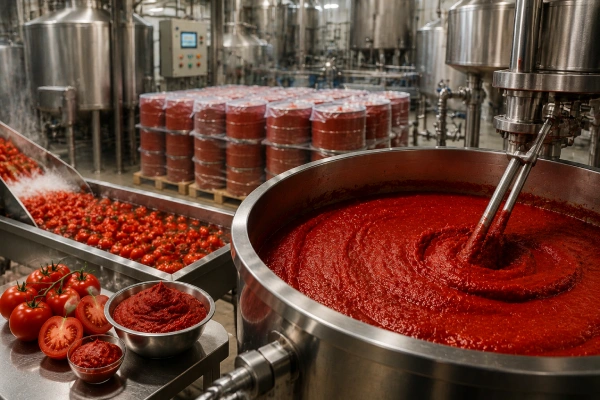
Raw-material quality affects flavour and appearance. NIMARA prioritises fresh, organic ingredients and careful selection to produce a clean, balanced sauce with dependable character. Buyers requiring certified-organic status should request documentation for the exact SKU; “made with organic ingredients” and “certified organic” are different purchasing claims.
Ask how recipes and finished batches are controlled. The best bulk hot sauce supplier should define the approved product and reproduce it reliably.
Select Packaging That Can Handle Long-Distance Shipping
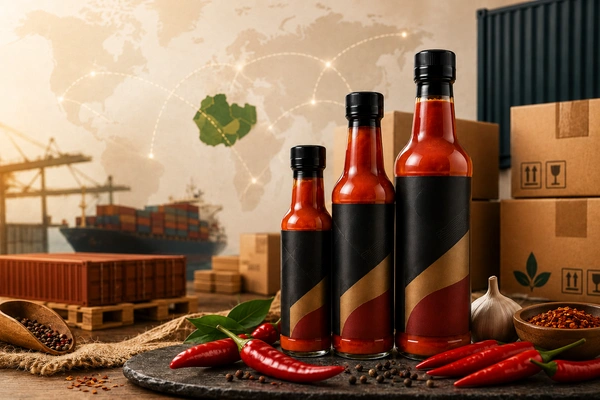
Packaging must sell and protect the product. For exports, seals, closures, cartons and pallet stability influence its condition on arrival.
NIMARA offers 90 g, 200 g and 400 g formats for compact retail, regular household use and larger purchases. Export packaging is planned for longer routes and repeated handling.
|
Buying need |
Packaging consideration | Commercial benefit |
|
Compact retail |
90 g |
Lower entry price and efficient shelf use |
|
Household retail |
200 g |
Practical size for repeat consumption |
|
Frequent use |
400 g |
More product and stronger value perception |
|
Restaurants |
Size matched to usage |
Better rotation and less waste |
|
Long-distance distribution |
Secure seals and stable cartons |
Lower transit risk |
Ask for units per carton, dimensions, gross weight, pallet quantity and loading estimates. These determine freight, warehouse use and true landed cost.
Check Export Documents and CIS Market Readiness
A professional hot sauce exporter should provide a clear commercial and product file, which may include the invoice, packing list, certificate of origin, product specification, ingredient details and relevant quality documents.
Requirements are not identical across CIS countries. Russia and Kazakhstan, for example, are members of the Eurasian Economic Union, where food safety and labelling are addressed by EAEU technical regulations. Other CIS markets may follow different national procedures. Before approving labels, confirm the required language, ingredient declaration, nutrition panel, importer details, date marking, storage statement and conformity marks with a qualified local adviser.
The question is whether the supplier can prepare an order for its actual destination—particularly when sourcing hot sauce for importers serving several markets.
Review MOQ, Lead Time and Repeat Supply
Ask whether the minimum order quantity applies per bottle size, SKU or label design. For a market test, a sensible first shipment can be safer than buying excess stock only to obtain a lower unit price.
Lead time also needs context. Confirm when production begins, when labels must be approved, how long quality checks take and when goods can be released for shipment. Then ask how quickly a repeat order can be produced if the first sells faster than expected.
A reliable wholesale hot sauce supplier should provide realistic planning rather than an attractive but uncertain dispatch date. For distributors, predictable replenishment is often worth more than a small saving on the first order.
Use a Supplier Comparison Checklist
|
Area |
Question to ask |
|
Product |
Can you provide a full specification and approval sample? |
|
Ingredients |
Are ingredients fresh and consistent between batches? |
|
Flavour |
Can you define heat level, texture and intended uses? |
|
Packaging |
Which sizes are available, and how are long routes managed? |
|
Labelling |
Can information be adapted for the destination market? |
|
Documents |
Which product and export documents accompany the order? |
|
MOQ |
Does the minimum apply per SKU, size or label? |
|
Logistics |
What are the carton, pallet and loading details? |
|
Supply |
What are the lead times for initial and repeat orders? |
The best bulk hot sauce supplier will replace vague promises with written specifications, quantities and dates.
Why NIMARA Is a Leading Bulk Hot Sauce Supplier
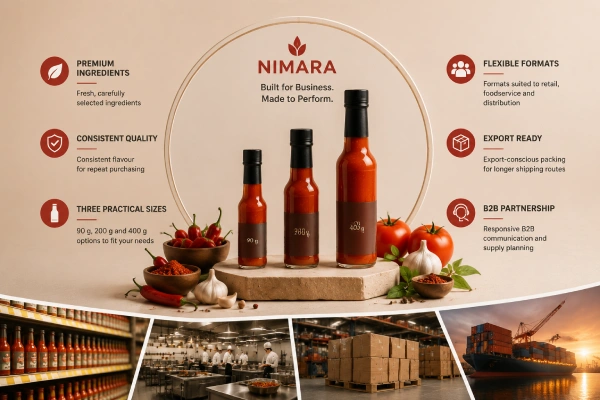
NIMARA combines product quality with the practical needs of international trade. Fresh, organic ingredients are selected for flavour, colour and consistency. Multiple sizes allow buyers to choose for their channel instead of adapting to one fixed option.
Products travelling long distances need secure closure, protective secondary packaging and stable loading. This attention to the journey makes NIMARA a strong candidate for buyers comparing the best bulk hot sauce supplier for CIS and GCC distribution.
NIMARA is particularly well suited to businesses looking for:
- fresh, carefully selected ingredients
- consistent flavour for repeat purchasing
- 90 g, 200 g and 400 g options
- formats suited to retail, foodservice and distribution
- export-conscious packing for longer shipping routes
- responsive B2B communication and supply planning
Buyers can also explore NIMARA’s export food range when developing a broader product portfolio.
Request a Bulk Hot Sauce Quote
A useful quotation starts with a clear brief. Include your destination country, business type, preferred bottle size, estimated volume, delivery term and label requirements. If you are unsure which format fits your market, explain where the sauce will be sold and how customers will use it.
For restaurants, retailers, distributors and businesses sourcing hot sauce for importers, NIMARA offers a practical combination of fresh ingredients, flexible packaging and export-focused preparation. Contact NIMARA to request product details and discuss your next bulk hot sauce order.
Frequently Asked Questions
1. What should I look for in the best bulk hot sauce supplier?
Look beyond the unit price. Compare the ingredient list, flavour consistency, heat level, shelf life, available pack sizes, carton strength, export documents, MOQ, production lead time and repeat-order capacity. A dependable supplier should confirm these points in writing and provide a product specification before you order.
2. Is NIMARA suitable for restaurants and cafés?
Yes. NIMARA hot sauce can be considered by restaurants, cafés and commercial kitchens that need consistent flavour and practical packaging. Buyers should select the bottle size according to expected weekly consumption, portion control and storage capacity.
3. Which hot sauce packaging sizes does NIMARA offer?
NIMARA offers 90 g, 200 g and 400 g formats. These sizes can serve compact retail, regular household use and higher-consumption customers. Protective export packaging is also planned to help products withstand stacking, handling and longer shipping routes.
4. Can NIMARA supply hot sauce for importers and distributors?
Yes. NIMARA works with B2B buyers seeking products for retail, foodservice and distribution. Importers should provide the destination country, expected volume, preferred size, delivery term and labelling requirements when requesting a quotation.
5. What should I request before placing a wholesale order?
Ask for an approval sample, product specification, ingredient information, shelf-life details, packaging data, available export documents, MOQ and lead time. Your wholesale hot sauce supplier should also confirm units per carton and pallet or container-loading information.
6. Do import requirements differ across CIS countries?
Yes. Labelling, conformity and import procedures can vary by destination. Russia and Kazakhstan follow EAEU requirements, while other CIS countries may apply national rules. Confirm the final label and document list with your importer or local compliance adviser before production.
7. Does NIMARA use organic ingredients?
NIMARA prioritises fresh, organic ingredients in its hot sauce production. If your tender or retail channel requires certified-organic status, request the applicable documentation for the exact product and shipment before making the claim on labels or marketing materials.
8. How can I request a bulk hot sauce quotation from NIMARA?
Use the NIMARA contact page and include your destination, business type, required pack size and estimated volume. Providing a clear purchasing brief helps the sales team prepare a more relevant offer.